



Share Your
Medical Report
Share with us medical report and explain patient's health condition.
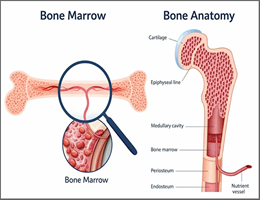
Bone marrow transplant is performed to treat blood diseases. It is a life-saving procedure, in this procedure, healthy stem cells are transplanted to replace the damaged or diseased bone marrow, and these stem cells develop into new blood cells. Stem cells are either taken from the patient’s own body or from a donor.
This procedure is used to treat various conditions, including leukemia, lymphoma, and myeloma, as well as genetic and other blood disorders. After a bone marrow transplant, the body begins producing blood again. Many major hospitals in India specialize in this treatment, offering patients a new ray of hope through this treatment.
Cost of bone marrow transplant (BMT) in India ranges from $15,000 to $38,000 USD depending on the type of transplant, location and hospital selection and post-transplant complications. This varies based on several factors:
Patient is required to stay in the hospital for 3 weeks post-transplant with a total stay of 2-4 months in India for close monitoring, infection prevention, immunosuppression management, GVHD surveillance, and post-transplant follow-up.
Success rate for bone marrow transplant varies by disease and transplant type, ranging from 60-90 percent to know the exact cost, please don’t hesitate to contact us. We offer you the best competitive prices through our extensive network of partner hospitals and medical centers, while maintaining quality assurance and healthcare standards.
A bone marrow transplant may be recommended for individuals with conditions that affect blood cell production or compromise immune system function. The following are common indications for this procedure:
Leukemia: Patients with certain types of leukemia, such as acute lymphoblastic leukemia (ALL) and acute myeloid leukemia, may require a bone marrow transplant as part of their treatment plan.
Aplastic Anemia: When the bone marrow fails to produce sufficient red blood cells, white blood cells, and platelets, a bone marrow transplant may be a viable treatment option.
Lymphoma: Aggressive forms of lymphoma, including non-Hodgkin’s lymphoma and Hodgkin’s lymphoma, may necessitate a bone marrow transplant.
Inherited Genetic Disorders: Hereditary conditions such as sickle cell anemia, thalassemia, and severe combined immunodeficiency (SCID) can be treated with bone marrow transplantation.
Other Blood Cancers and Disorders: Additional conditions that may require a bone marrow transplant include multiple myeloma, myelodysplastic syndromes (MDS), and certain immune system disorders.
Autologous Bone Marrow Transplant:
In this procedure, stem cells are collected from the patient’s own body before undergoing high-dose chemotherapy or radiation treatment. These stem cells are preserved for storage through cryogenic freezing. Following the completion of intensive chemotherapy or radiation therapy, the stored stem cells are reinfused into the patient’s body to restore normal blood cell production. This approach is also referred to as a “rescue transplant” because it rescues the patient’s ability to produce healthy blood cells after aggressive cancer treatment.
Allogeneic Bone Marrow Transplant:
In this procedure, stem cells are obtained from a donor whose genetic markers must closely match the patient’s Special compatibility tests, including human leukocyte antigen (HLA) typing, are performed to determine whether a donor is suitable. Siblings often provide the best match, though parents, children, and other relatives may also be compatible donors. For patients without matched family donors, national and international bone marrow registries maintain databases of unrelated volunteer donors who may provide a suitable match.
Umbilical Cord Blood Transplant:
An umbilical cord blood transplant uses stem cells collected from a newborn baby’s umbilical cord immediately after birth. These stem cells are frozen and stored in cord blood banks until they are needed for transplantation. Because cord blood stem cells are immunologically immature and less developed, they require less precise matching between donor and recipient compared to adult stem cells. This makes it easier to find compatible donors, especially for patients from diverse ethnic backgrounds. However, cord blood contains fewer stem cells than other sources, so it takes longer for the patient’s blood counts to recover and return to normal levels after transplantation.
Bone marrow failure
Blood cancers requiring intensive treatment
Some solid tumors (rare)
Immune system disorders
Genetic blood disorders
Other possible side effects that may occur during or following the stem cell infusion include:
These side effects are rare and typically mild. Should they occur, appropriate treatment will be provided as needed.
Bone marrow transplant in India offers an exceptional combination of affordability, quality, and accessibility. Patients can access world-class transplant programs at a fraction of international costs. Successful outcome lies in choosing experienced hematologists and world-class accredited BMT centers with latest technologies, dedicated international patient services, and long-term coordination every step of the way. Key advantages of choosing India:
To know about cost, procedure, and quality of treatment in India, contact us to discuss the facilities and services we offer for international patients.
The cost of bone marrow transplant in India typically ranges from approximately $15,000 to $38,000 USD, depending on the type of transplant (autologous or allogeneic), donor matching requirements, the hospital facility, post-transplant care duration, and potential complications.
For allogeneic transplants, the package typically includes HLA typing and donor workup. However, if an unrelated donor search is required through international registries, additional costs may apply ranging from $3,000 to $8,000 USD.
The total duration in India is typically 8-12 weeks. This includes pre-transplant evaluations, the transplant procedure, hospitalization (3-4 weeks), and post-transplant monitoring in isolation until engraftment is confirmed and initial recovery is stable.
Autologous transplant (using patient’s own stem cells) costs approximately $15,000-$25,000 USD, while allogeneic transplant (using donor cells) costs $25,000-$38,000 USD due to additional donor procedures, matching tests, and higher complication management needs.
Yes, leading transplant hospitals in India prove success rates of 70-95%, comparable to top international centers. Many Indian hospitals are accredited by JCI and have experienced transplant teams performing thousands of procedures annually.</p
Patients typically stay 3 weeks in the hospital, with the first 2 weeks in strict isolation to prevent infections during the vulnerable period. Extended stay may be required if complications arise.
Yes, regular follow-up is essential for at least 1-2 years post-transplant. We provide comprehensive discharge summaries, medication protocols, and coordinate with your local hematologist for ongoing monitoring of blood counts, organ function, and graft-versus-host disease (GVHD) if applicable.
Complication rates vary by transplant type and patient condition. Autologous transplants have lower risk (10-15%), while allogeneic transplants carry higher risk (20-30%) including GVHD, infections, and organ toxicity. Experienced centers manage these effectively with advanced protocols.
Yes, reduced-intensity conditioning allows patients up to 70-75 years to undergo transplantation safely. Eligibility depends on overall health status, organ function, and disease characteristics rather than age alone.
The actual stem cell infusion takes 1-4 hours, similar to a blood transfusion. However, the entire process includes chemotherapy (7-10 days before), the transplant day, and engraftment period (2-4 weeks after) when new cells begin producing blood.
Bone marrow transplant treats various blood cancers (leukemia, lymphoma, multiple myeloma), bone marrow failure syndromes (aplastic anemia), sickle cell disease, thalassemia, and certain immune deficiency disorders.
Engraftment typically occurs 10-28 days after transplant, when donor cells begin producing new blood cells. This is confirmed through rising blood counts and testing to verify donor cell presence.
Patients stay in HEPA-filtered rooms with strict infection control. Visitors are limited and must follow hand hygiene and masking protocols. This isolation continues until immune recovery, typically 2-4 weeks post-transplant.
Essential tests include complete blood counts, bone marrow biopsy, HLA typing, infectious disease screening, organ function tests (heart, liver, kidney, lung), and imaging studies. Results should be sent to the transplant center for evaluation and planning.
Many patients require long-term medications including immunosuppressants (for allogeneic transplant to prevent GVHD), antimicrobials for infection prevention, and supportive medications. The duration varies; some medications may be tapered over 6-12 months, while others continue longer.

Director of Medical Oncology & Hematology | Bone Marrow Transplantation Specialist
Bone Marrow Transplant, Blood Cancer Specialist, Pediatric Hematology, Medical Oncology

Vice Chairman of Haemato-Oncology & Bone Marrow Transplantation
Bone Marrow Transplant, Acute Lymphoblastic & Myeloid Leukemia, Hairy Cell Leukemia, Multiple Myeloma, Polycythemia Vera,

Share with us medical report and explain patient's health condition.
We will share with you doctor's opinion and treatment plan within 24 hours.
On agreed, we will send you visa invitation letter from hospital to get a visa.
Book your flight ticket and share flight itinerary with us to pick-up you from Airport.
We provide complete coordination and translation at every step of your treatment journey.
We drop you off at Airport and stay in touch with you to follow up.